

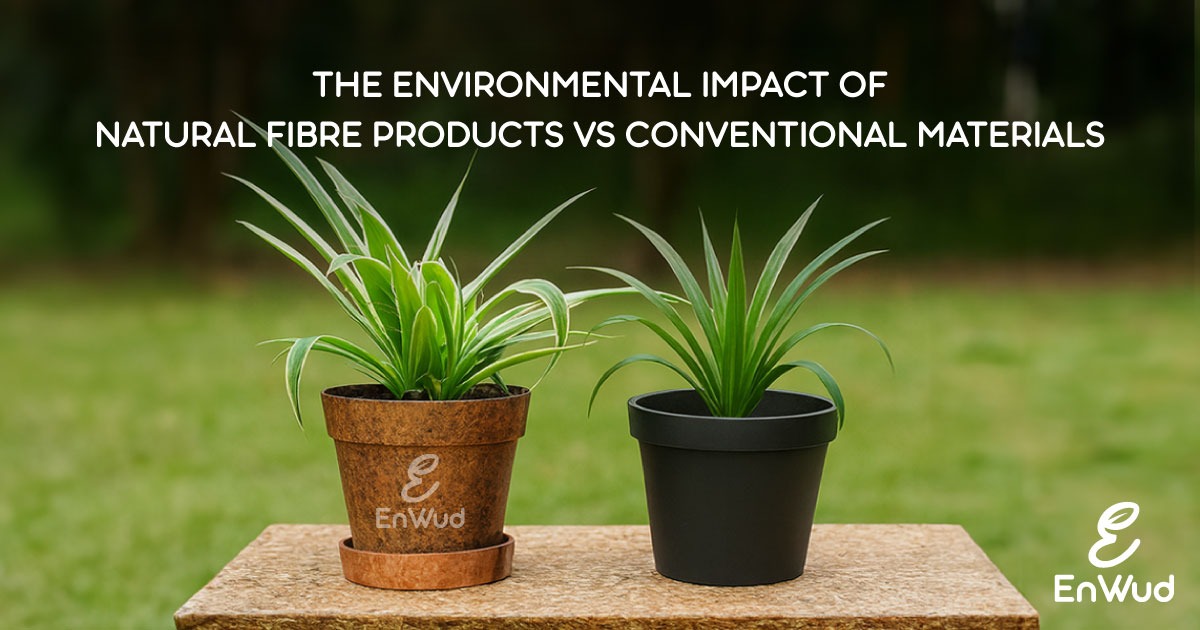
Manufacturers and consumers now prioritise sustainability and choose materials that demonstrate environmental responsibility. When comparing natural fibres vs materials, eco-friendly natural fibres—such as cotton, jute, hemp, bamboo, sisal, and rattan—often provide more environmentally friendly alternatives to traditional materials like metals, plastics, and synthetic fibres.
Natural Fibres vs Materials: Why It Matters
Traditional materials have supported industrial growth for decades, but their environmental impact is significant.
1. High Impact of Resource Extraction
Metals require extensive mining operations that consume large amounts of water and energy. Plastics, on the other hand, are derived from fossil fuels, contributing directly to carbon emissions and environmental degradation.
2. Non-Renewable Resources
Most conventional materials rely on finite natural resources. Once depleted, these resources cannot be replenished, making them unsustainable in the long term.
3. Long-Lasting but Environmentally Harmful
Plastics and metal alloys are valued for their durability, but their resistance to natural degradation creates long-term pollution problems, especially in landfills and oceans.
4. Chemical Emissions and Pollution
Many synthetic materials release volatile organic compounds (VOCs) and microplastics over time, posing risks to both human health and ecosystems.
Natural Fibres: A Sustainable Alternative
Natural fibres offer a more environmentally responsible solution, especially when sourced and processed correctly.
Merits of Extracting Natural Fibres from Raw Materials
1. Renewable Resources
Natural fibres are derived from plants or animals, making them inherently renewable. Fibres such as bamboo, jute, and hemp grow rapidly and require minimal agricultural inputs.
2. Reduced Use of Chemicals
Crops like hemp and jute typically require fewer pesticides and fertilisers compared to conventional crops, resulting in lower soil and water pollution.
3. Breathable and Comfortable
Natural fibres are well-known for their moisture-regulating properties and thermal comfort, making them ideal for a wide range of applications.
4. Biodegradability
Unlike plastics, natural fibres decompose naturally over time, returning nutrients to the soil without leaving harmful residues.
5. Positive Environmental Impact
Many fibre crops improve soil quality, promote biodiversity, and absorb carbon dioxide during growth, helping mitigate climate change.
6. Non-Toxic and Safer
Natural fibre products generally release fewer harmful emissions and require fewer chemical additives, making them safer for both users and the environment.
Limitations of Natural Fibre Products
While natural fibres offer many advantages, they also have certain limitations.
- Some untreated natural fibre products may deteriorate faster than synthetic alternatives.
- Exposure to excessive moisture or harsh weather conditions can affect durability if not properly designed or treated.
However, thoughtful product design and responsible processing can significantly extend their lifespan.
Benefits of Natural Fibres over Traditional Materials
The wood industry is one of the major contributors to deforestation, leading to the loss of green cover and disruption of climate cycles. Coir, derived from coconut husk—a natural agricultural by-product—offers a sustainable alternative to timber and wood-based products.
In recent years, coir has evolved far beyond its traditional uses. Continuous research and innovation have enabled the development of coir-based boards, garden products, and furniture that effectively replace conventional wood without compromising on strength or aesthetics.
By choosing coir instead of timber, we reduce tree cutting, minimise waste, and promote circular use of natural resources.
Comparing Natural Fibres vs Materials for a Greener Future
The sustainability of natural fibre products depends on several critical factors:
- Responsible and ethical farming practices
- Minimal environmental impact during processing
- Avoidance of harmful chemical treatments
- Eco-friendly dyeing and finishing methods
- Intelligent product design to ensure durability and long-term use
When these conditions are met, natural fibres become one of the most environmentally friendly material choices available today.
Conclusion
Natural fibre products have a significantly lower environmental footprint compared to conventional materials such as plastics, metals, and synthetic fabrics. Their renewability, biodegradability, reduced emissions, and minimal reliance on fossil fuels make them essential for a sustainable future.
At EnGardenware, we are committed to promoting eco-conscious living through innovative coir and natural fibre products that protect the planet while delivering performance and style. By choosing natural fibres today, we take a meaningful step towards preserving the environment for generations to come.